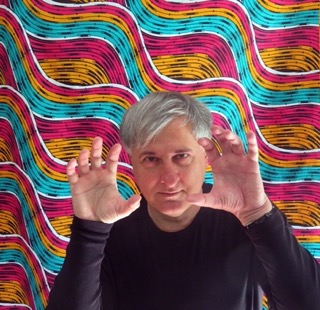

Aleksandar Zograf and Comics as Collective Memory
Aleksandar Zograf, pseudonym of Saša Rakezić (1963, Pančevo), is a central figure in contemporary comics of Southeastern Europe, known for his ability to intertwine autobiographical elements, historical memory, and imagination. Active since the mid-1980s, he began publishing in 1986 in Serbian magazines and quickly established himself on the international scene from the early 1990s.
His work immediately stood out for its strong international circulation, with contributions to major independent comics and visual culture magazines such as Weirdo, The Comics Journal, Zero Zero, Rare Bit Fiends, and many others across the United States, Europe, and beyond. This international presence helped define Zograf as a distinctive voice within global underground comics.
One of the most significant aspects of his poetics is the fusion of personal experience and dreamlike dimension. His works often explore dreams, visions, and altered states of consciousness, as in the series Psychonaut, combining these elements with an ongoing reflection on history and identity. At the same time, works such as Life Under Sanctions and Flock of Dreamers reveal a tension toward depicting reality filtered through an intimate and subjective sensibility.
The most crucial moment of his career coincides with the NATO bombings in Serbia in 1999. During this period, Zograf produced a series of reports in the form of emails, distributed online and later collected in volumes such as Bulletins from Serbia, Lettere dalla Serbia, and E-Mails de Pancevo. These works represent a direct and deeply human testimony of everyday life under siege and stand as some of the most significant examples of comics as a tool for reportage and historical memory.
From this experience also emerged one of his best-known works, Regards from Serbia, initially published online between 1999 and 2001 and later collected in book form. In it, Zograf develops a diary-like narrative that combines daily observation, political reflection, and personal dimension, consolidating his role as an author capable of portraying conflict from a human, non-rhetorical perspective.
Throughout his career, Zograf has published an extensive body of work in various countries, including Italy, France, the United States, Serbia, and Japan. Among his most relevant titles, in addition to those already mentioned, are Dream Watcher, Bons Baisers de Serbie, Vestiges du monde, Les lettres d’Hilda Dajč, and Il quaderno di Radoslav e altre storie della II guerra mondiale, which demonstrate the continuity of his research between historical memory and visual storytelling.
Alongside his publishing activity, Zograf has carried out an intense international cultural activity, participating in festivals, conferences, and exhibitions across Europe, the United States, and Asia, including the Angoulême Festival and Lucca Comics. His works have been exhibited in major institutions such as the Cartoon Art Museum in San Francisco, contributing to the recognition of comics as a contemporary art form.
He has also played a key role locally: Zograf was the artistic director of the GRRR! comics festival in Pančevo and a promoter of numerous cultural initiatives, including workshops, meetings, and programs dedicated to comics and visual arts. This activity highlights his commitment not only as an author but also as an active figure in the dissemination of comics culture.
Overall, Aleksandar Zograf’s work stands as a significant example of comics understood as an archive of collective memory, capable of transforming individual experiences into universal narratives. Through a visual language that is both essential and deeply evocative, Zograf offers a unique perspective on the recent history of the Balkans, demonstrating the potential of comics as a medium of testimony, reflection, and cultural resistance.